Maria Becerra
Quimera 360° World Tour
2025
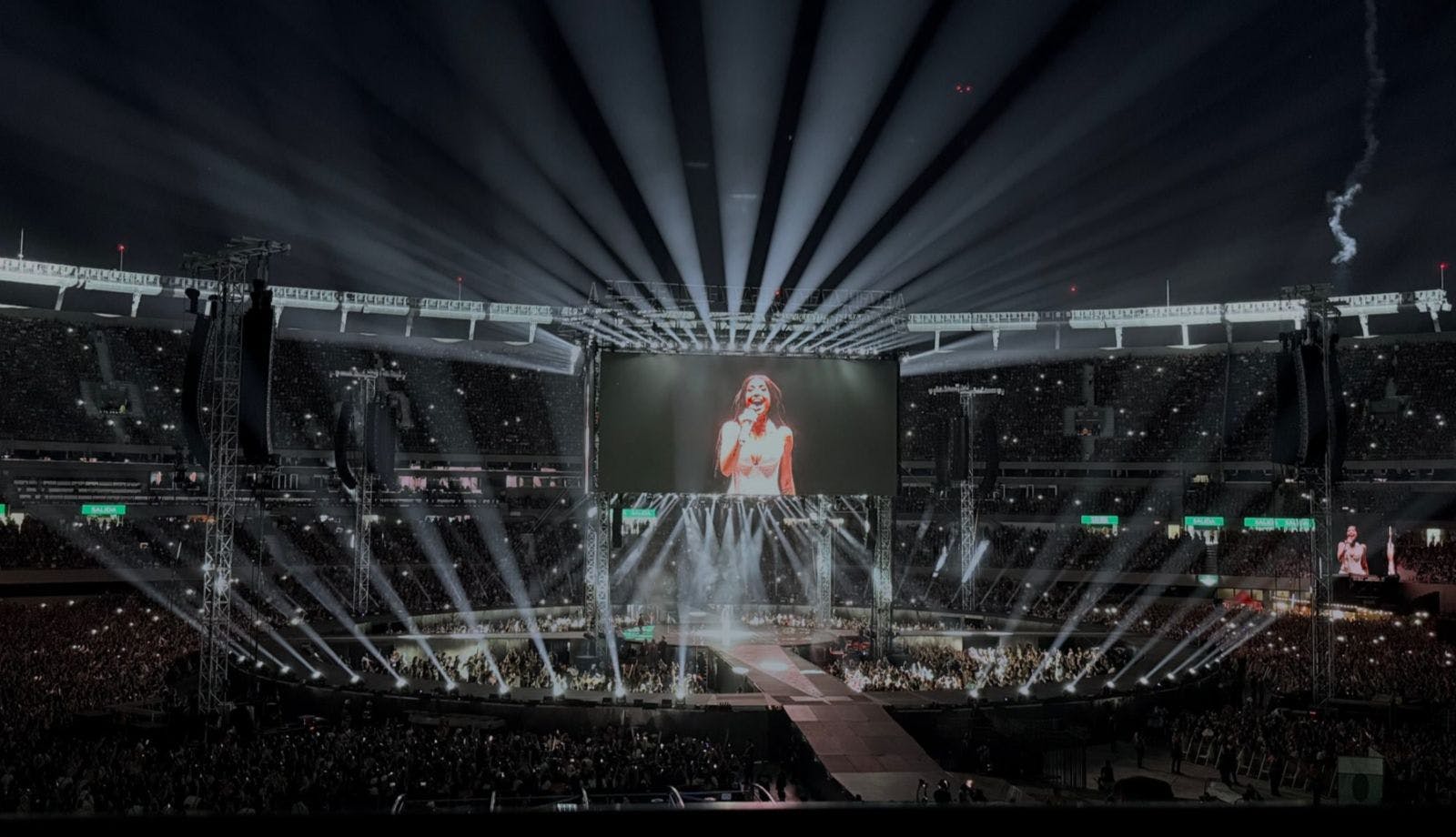
"María Becerra delivered an unforgettable immersive performance, surprising the audience with theatrical sketches, a circular stage, and world-class production elements never seen before at El Monumental."
La Nacion

Quimera was built as a complete creative system, not just an album and not just a show.
The project is structured around four alter egos interpreted by María Becerra, each radically different in tone, energy, and visual identity. These characters aren’t surface-level aesthetics. Each one has its own atmosphere, movement language, color world, and performance intensity. The live show unfolds in four acts dedicated to these personas, pushing them to their maximum scale inside a 360° stadium environment. After that expansion, the show closes with María herself (stripped back, personal, and grounded) bringing the narrative back to its human center.
The development of Quimera was deeply collaborative. Creative and show director and designer Corinne Merolla worked closely with María from the inside of the process, not just designing a stage, but helping translate the psychology of these alter egos into visual form. That proximity allowed the world to stay coherent across everything: album artwork, music videos, visual identity, and the 360° stadium production.
Quimera became a complete universe because it was designed and thought of that way from the start.
How we got there
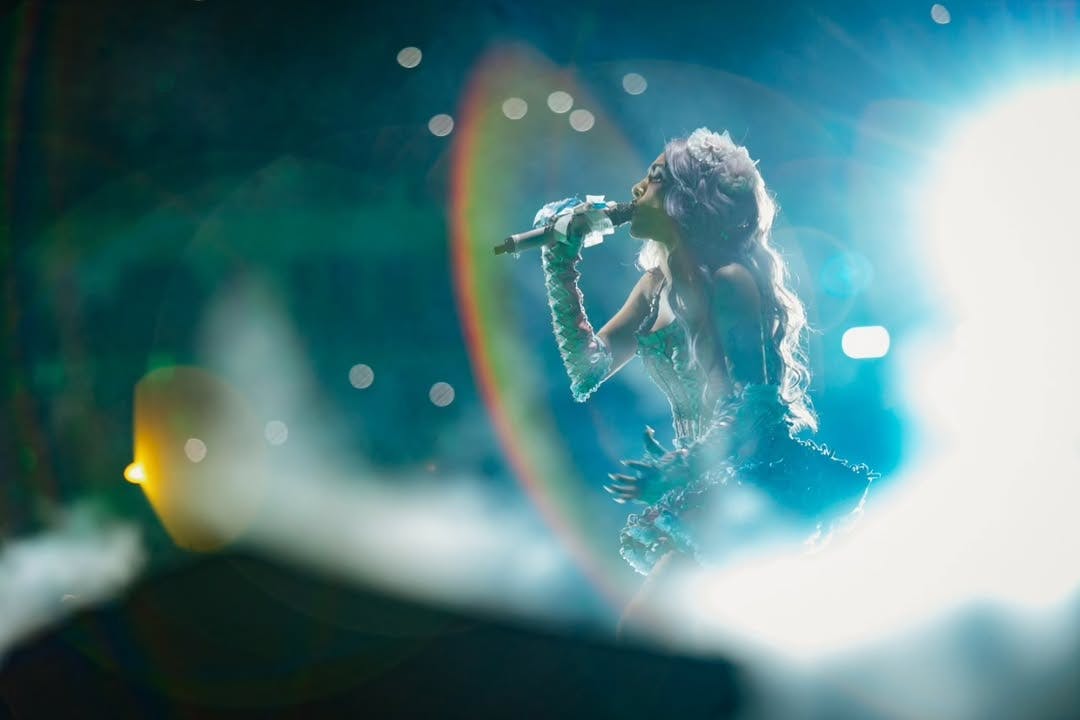
María Becerra’s 360° stadium show was built as a story told in four acts, each centered on one of her alter egos, followed by a final, intimate chapter with María herself. The production wasn’t based on random spectacle, it was structured around the strong contrast between these identities, each one radically different in personality, energy, and visual world.
Shanina opened the universe as the obsessive otaku, chaotic, hyper-saturated, emotionally explosive. Her world was neon, cyberpunk, exaggerated and intense. Fast pacing, bold visuals, and a sense of controlled madness defined her presence.
Maite represented the opposite extreme. Centered, composed, and emotionally deep, she carried the energy of a professional woman, sharp, precise, internally complex. Her world felt more restrained, more grounded, with a stronger focus on emotional weight and physical control.
Gladys brought the raw energy of popular Argentine cumbia culture. Inspired by prison imagery and street strength, her section introduced metal structures, cells rising within the stage, and a direct, unapologetic presence. It was bold, physical, and confrontational.
Jojo entered as a gothic, sadistic femme fatale, theatrical, dominant, darkly seductive. Her act leaned into stylization, strong silhouettes, dramatic lighting, and a heightened performance language that felt closer to a stage play than a pop concert.
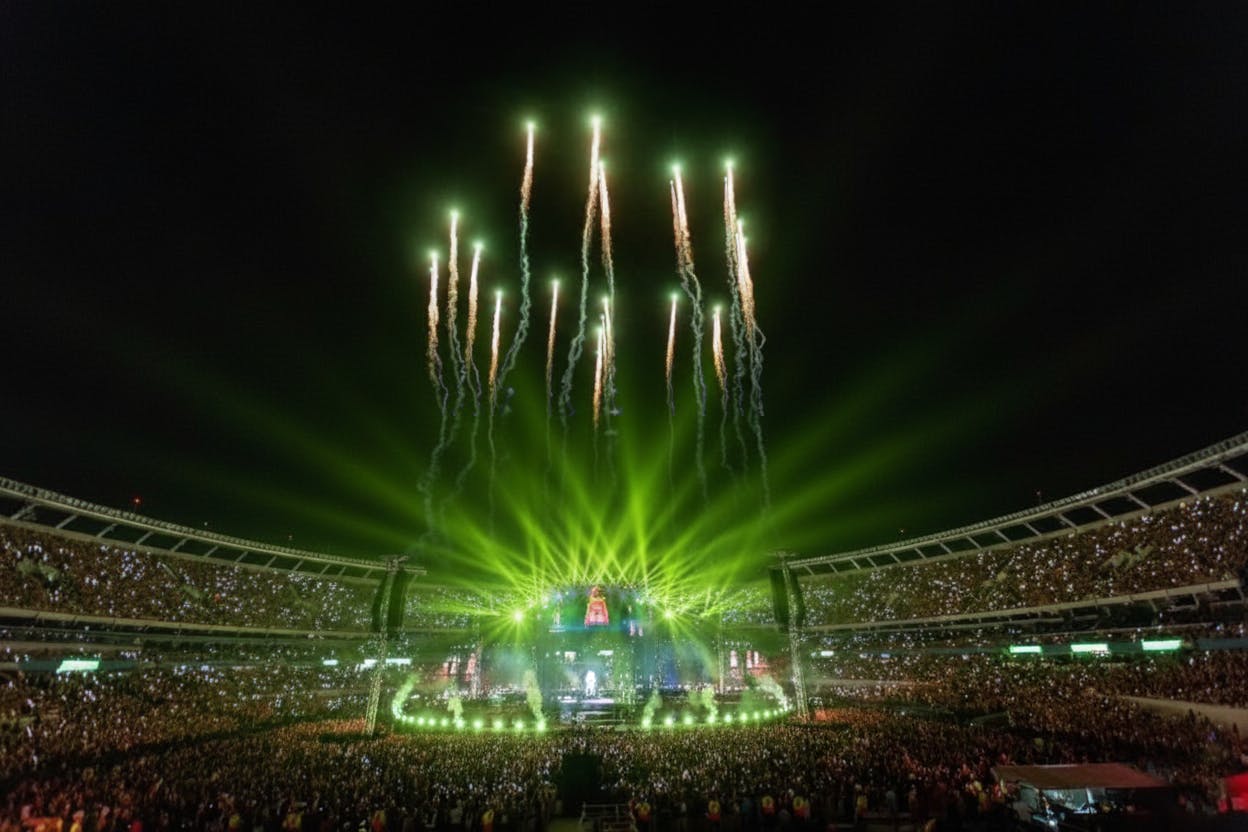
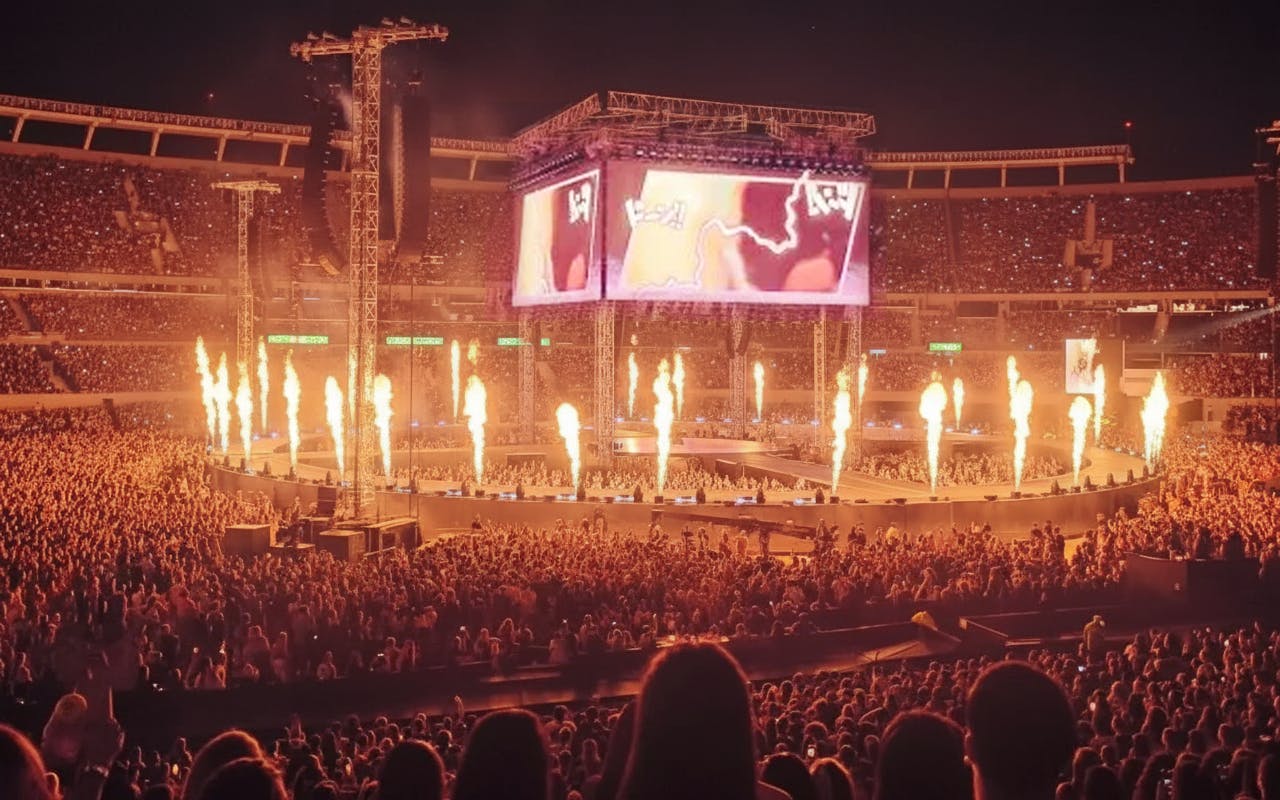
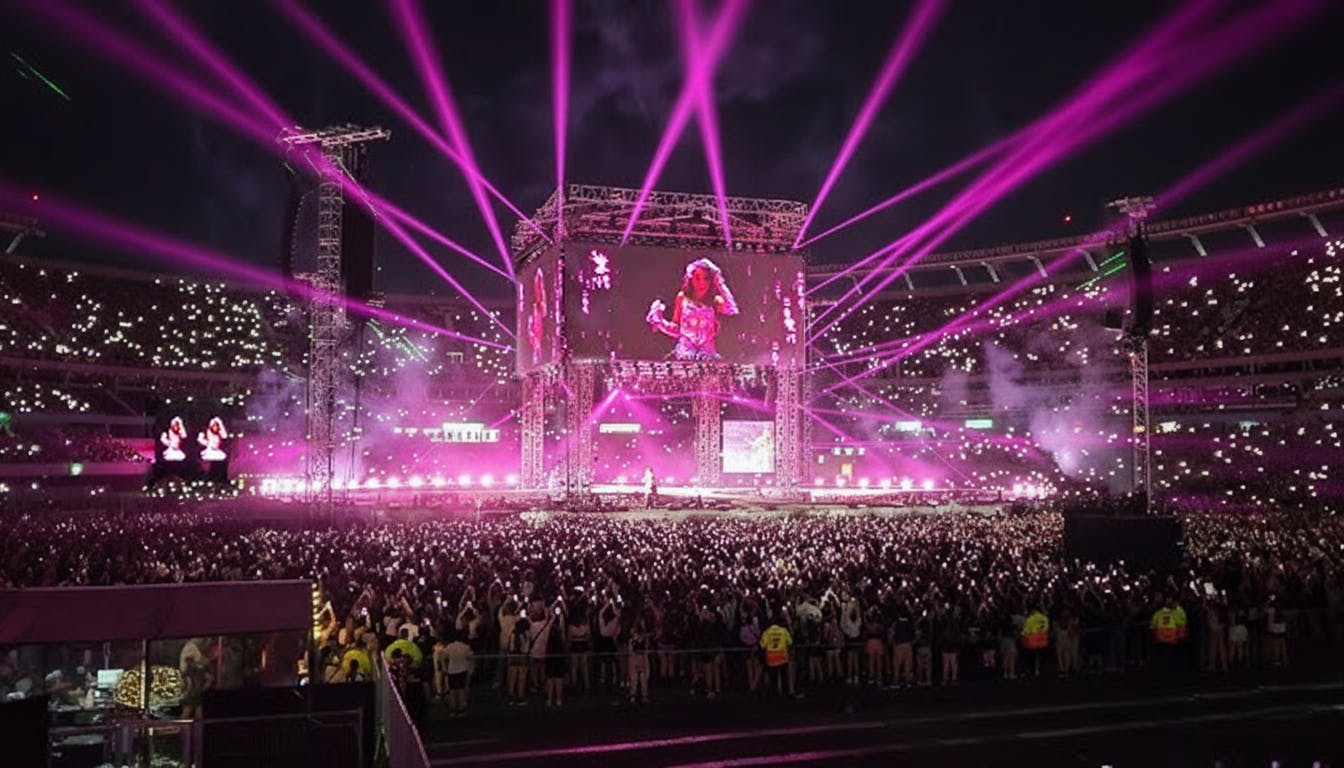
Each character completely transformed the stadium. Tone, lighting, choreography, and scenography shifted act by act. The show moved through a six-meter scorpion, prison cells, demonic wings, a neon cyber world, a flying bed, a full bedroom set, and a five-meter marble sculpture, each element reinforcing the personality of the act it belonged to.
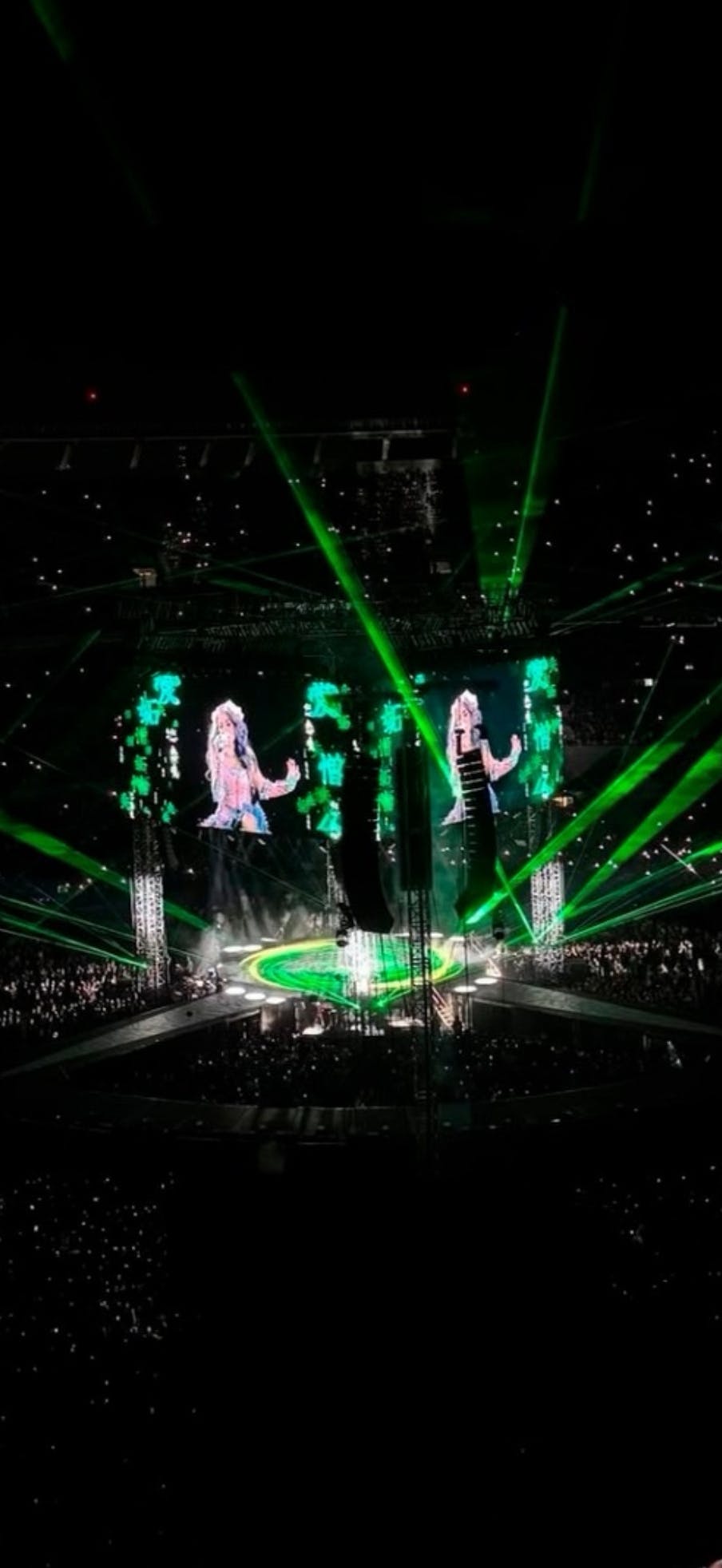
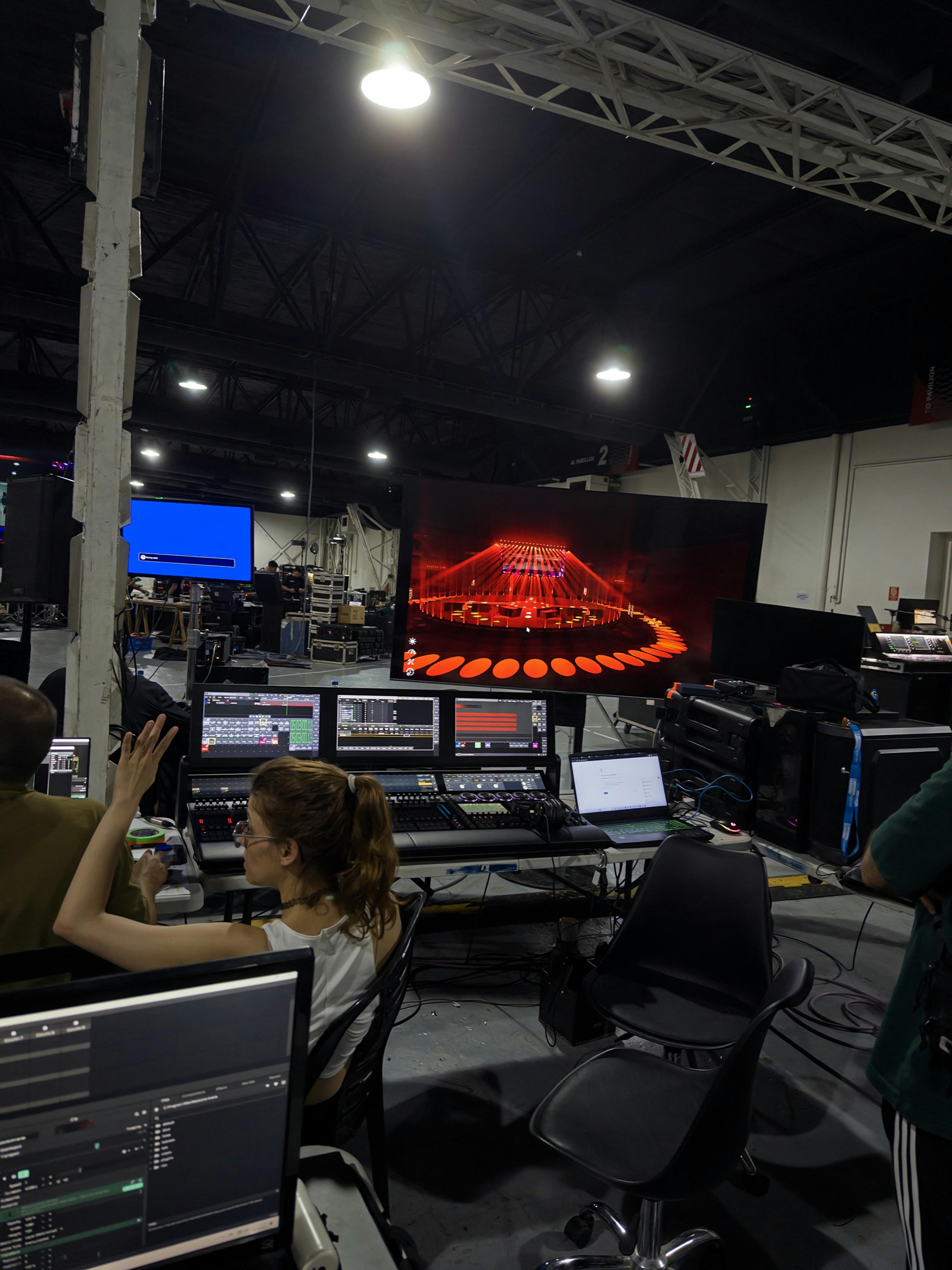
The stage was designed around the geometry of a compass rose. We used that structure as a practical layout tool, not just a visual reference. We built the stage as a radial form: a central core with extensions projecting outward like the points of a compass. The reference also connected subtly to the sun symbol in Argentina’s flag, reinforcing the idea of expansion from a center.
The morphology was clean and symmetrical. The radial arms organized choreography, camera lanes, and movement across the stadium. Vertical towers were positioned along the main axes, giving height and structure to the design. These towers carried lighting, screens, and special effects, while helping frame the space without blocking sightlines.
The result was a stage that functioned clearly in every direction, balanced, legible, and built to hold both large-scale spectacle and intimate moments within the same structure.
After pushing scale and intensity through the four alter egos, the show deliberately contracted. The spectacle reduced. The visual density softened. María appeared as herself connecting directly with her audience in a more personal and human closing moment.
What made this production historic was not only its size, but its clarity. María Becerra headlined a fully narrative 360° stadium show at River Plate, a milestone in Argentina and a new benchmark for female-led stadium productions in the region. It wasn’t just a concert. It was a character-driven world built at full stadium scale.






Team



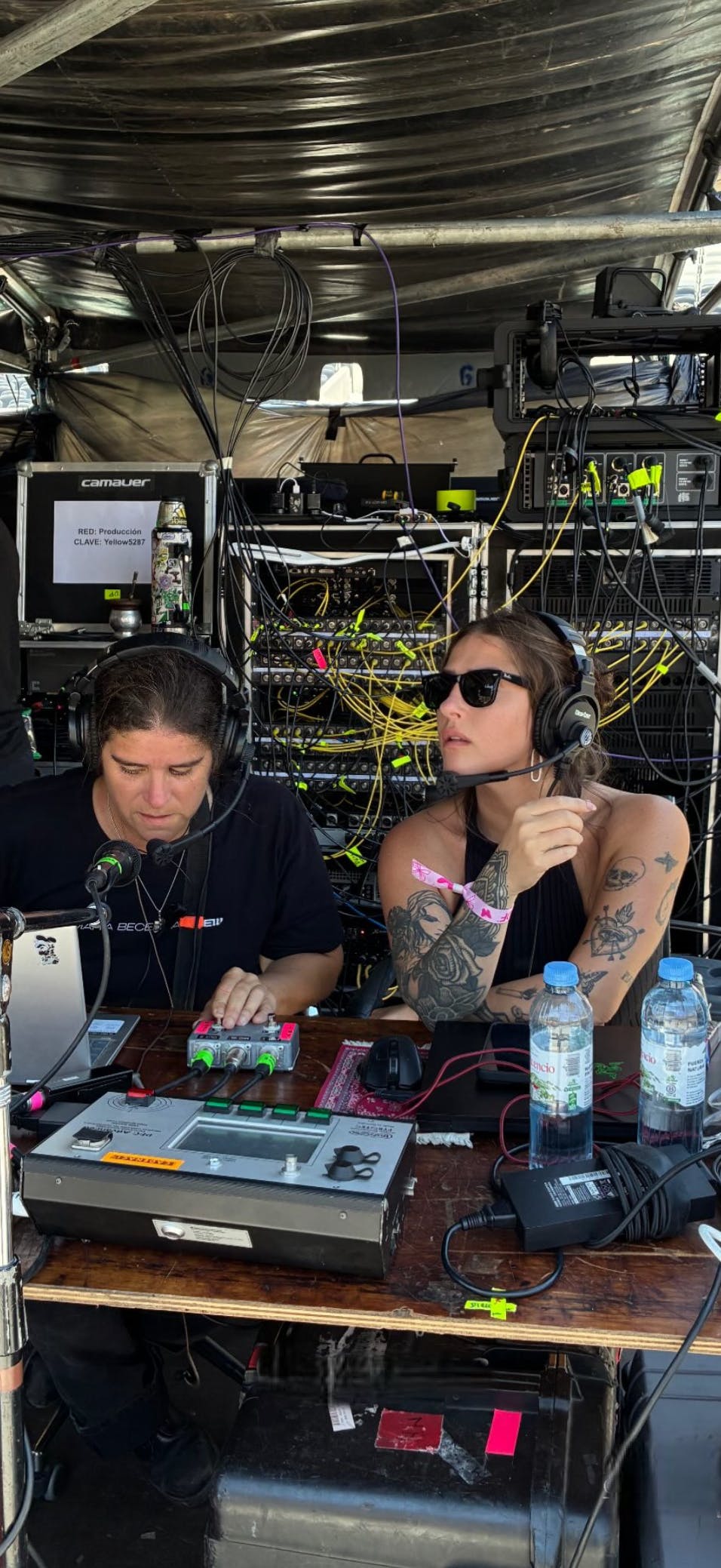
Pablo Martinelli
Lighting Programmer & Lighting Director

Rocio Nuñez
Choreographer

Mariano Florido
Choreographer

Jota
Video Director


Ale Rossi
Music Director

Joaquin Waiman
Music Director

Maruja Cecccotti
Show Runner & Creative Coordinator

Milena Martinez
Creative Assistant & Graphic Designer


“Fans experienced a multi-sensory narrative where music, performance, and visual design came together, elevating the standard of large-scale shows in the region.”
La Folk Argentina



"With more than 170,000 attendees across two nights and the first 360° show in the venue’s history, she confirmed herself as one of the most influential live artists in Argentina and beyond, setting a new standard for live production in the country."
Filo News